
“The value of developing relationships lives on.”

Tell us about yourself and your biggest focus right now 

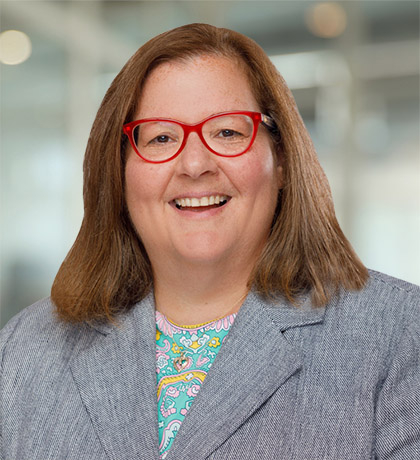
I’m Denise Dellaratta, Chief Practice Services Officer at Fox Rothschild. I spend the majority of my time building human resources. I focus on what our human capital looks like and how we leverage it within the organization. I’m here to help people grow.  

AI has added a layer of complexity, and the immediate reaction is always ‘it’ will take my job. Today, the ‘it’ is AI, but next week it might be something else. My message to timekeepers, business, and administrative people is to double down. This is the time to dig in and learn ‘it’ to make you better. 

Is your job going to look the same next week? No, but it likely wouldn’t anyway. 

People like me wouldn’t be sitting in this seat if there weren’t evolution in law firms. The depth and creativity of C-suite roles have really increased beyond just CFO, COO, and CEO. 

What is the one behavior or mindset you believe most determines long-term success in a law firm? 

Vulnerability and flexibility; I guess that’s two. You must be nimble. You cannot sit still. You must have the ability to accept failure. 

Some of my biggest achievements have come from failure. Somewhere along the line, I tripped. But I had the ability to own the trip and then get back up. Okay, that didn’t work; now what do I do? 

One of our constant internal campaigns is ‘Excellence at all levels.’ Excellence is a required, intrinsic quality we need to bring through the door every day. 

We also need to be nimble. We have to embrace change. Building that agility is a bottom-up endeavor. The base of the organization, which is all the business and administrative professionals who support the structure, must believe it, talk about it, encourage it, and sell it. 

What's the boldest change you've championed, and what did you learn from it? 

As part of our staffing model changes, we implemented a firm-wide docketing and calendaring process. That means the responsibility shifted from the core case team members and given to a group of specifically trained individuals. Case team members became the reactive link rather than the proactive one in the chain for docketing matters. 

For our docketing team, that transition from individual contributor to process manager was very difficult. We tripped a lot at the beginning, until we got all case team members to understand that they were still accountable for the dates. 

The biggest challenge was to get the buy-in of partners, who are experts in practicing law. Seeking assistance in a crucial element of case management requires trust and certain amount of “letting go.” Centralizing this function allowed the partners to plan better and work with additional resources. 

When you’re trying to make a transition like this, remember that you don’t need to be the smartest person in the room. You need to build trust, listen, and you must be proud of it. That’s where I struggle, because I just want to keep moving on to the next task. But I’ve learned to be proud of my accomplishments. I own them just as I own my failures. 

"When you sit in a supporting role, you see things that others can’t."

How do you encourage your team to think more boldly? 

I am driven by will, and I encourage my teams to have that same agency. Implement. Try it. If it doesn’t work, we’ll pivot and use what we learn to move forward again. Just don’t be stagnant. That encouragement is one person at a time, one project at a time. It’s arduous, but it matters. 

Every year for 24 years, I’ve sent a handwritten thank you note to every member on all of my teams. I buy something small, package it with the note, and send it off. Every little thing helps them buy into the process and trust me. 

I really do give a s*** about the people I work with. Everyone is experiencing something, every day. I am empathetic to the “flat tire” or their “pet is at the vet,” but I can’t own all of that for you. When you’re here, I want to be a big part of your success. 

What is the biggest shift law firms need to make in the next three years? 

We have to shift our hiring approach to a more creative, less linear one. It can’t just be a like-for-like replacement. We can’t stay reactive like that. We have to evaluate firm-wide to find the skills/areas where we lack staffing. 

Firms continue to grow through laterals. As you’re bringing them in, consider how the individuals will fit, how the workflow will fit. 

And then, technology. It needs to be implemented in a meaningful way, not to follow the trends. It’s going to shift how we staff, charge, and work. We need to remain ahead of it. 

What's one widely held belief in the legal industry that you think is wrong or outdated?

The value of business and administrative professionals is still underestimated. These people's perspectives are totally different and valuable. When you sit in a supporting role, you see things that others can’t. 

We’re slowly changing things. First, law firms started putting former practitioners into C-suites; now, we’ve segued into those who never practiced law. But there’s still work to do. 

"If you have the trust of the people that you work with, the rest you can learn and teach."

How are you using data and AI to reshape how your people work? 

Law firms are traditionally late adopters to new technology – including computers. But now we are forced to adopt it as fast as the rest of the world. We don’t have a choice, because we’ll lose otherwise. That’s a big cultural shift in behaviors, but also in dollars. 

Broadly, we want to remind people to double down and learn. Don’t look for ways to replace yourself. Find ways to do things better. 

AI, for example, doesn’t reduce the amount of work I have to do to get through an evaluation process. But it does save me some of the tedious tasks, keeps me focused, and helps me reach a more valuable evaluation. 

What's one piece of advice for the next generation of legal leaders? 

The value of developing relationships lives on. During the pandemic, we placed a very high value on constant communication. In my opinion, that came from a place of mistrust. Go and sit in a room with your people, communicate, connect. 

I’m not a social person, but the ability to connect with people, meet them where they are, and get them where they’re going is foundational. If you have the trust of the people that you work with, the rest you can learn and teach. 

Describe your role in one word. What does that word mean to you?

Resource. 

I am willing to either be the person who does it, find the person who does it, or train the person who does it. I’m open to whatever needs to be done. 

People view me that way. I don’t need them to, but I need them to find me, so I can help them find what they need. 

Anyone coming into a role like mine, leave self-doubt at the door. Enough people are going to doubt you when you get to the table, so don’t bring it in. Be pragmatic and honest with yourself. Don’t forget how you got there. 

"You must be nimble. You cannot sit still. You must have the ability to accept failure."

More stories,
more inspiration


cyan Arrow

Read more interviews