



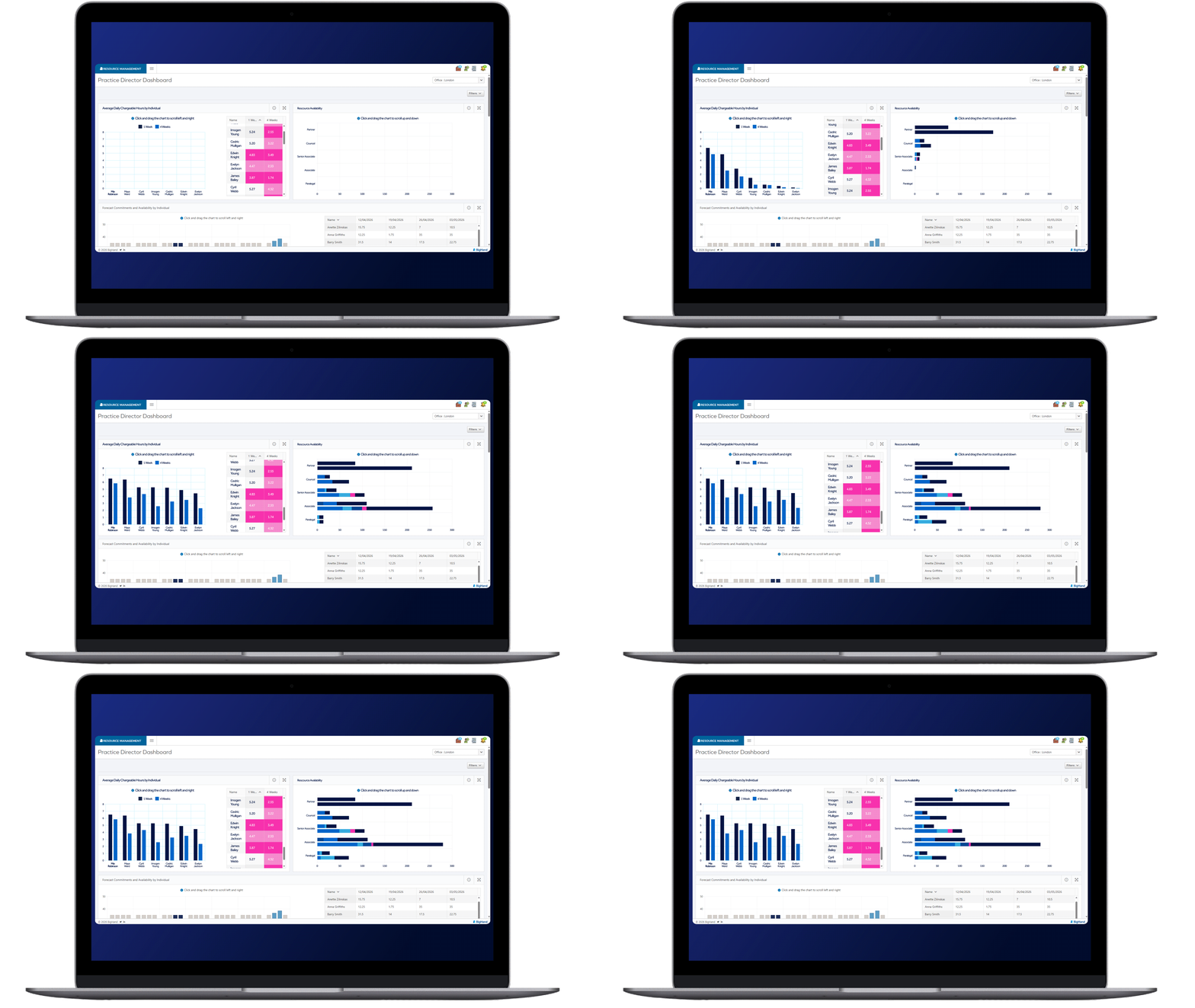
Three reasons work allocation is shaping decisions, delivery and performance more than most firms realize.

Decisions made on guesswork
Partners are staffing matters from memory and personal networks, not visibility of who's available or best suited.

Delivery that varies by matter
Without visibility of workload and skills, staffing is inconsistent, and clients feel the impact.

Performance that is hard to measure
Uneven workloads sit alongside underused capacity - affecting margin, retention, and morale.


Trying to do what we were doing as a smaller firm was not feasible. Our partners couldn't keep everybody's professional development goals and dreams in their head. They couldn't have to continuously keep pivoting to management reports and our accounting tools to see where we were at in terms of hours.
- Jenny-Anne Flores
Director of Practice Management at LCW

What a mid-sized law firm learned about improving work allocation and capacity visibility

Work allocation & capacity visibility in mid-sized law firms.
Most mid-sized firms rely on partner judgement, informal conversations, and spreadsheets or siloed tracking rather than a structured process. It works well enough at a certain size. As firms grow or complexity increases, the informal approach that once worked starts to show its limits — the gaps become visible in lost time and uneven delivery.
The trigger is usually friction in day-to-day delivery, not broader strategic intent. Partners are spending significant time coordinating work and checking availability; there is limited visibility into who is actually busy versus assumed to be busy; and clients are expecting faster turnaround and more predictable delivery. When firms scale or demand becomes less predictable, informal approaches are harder to sustain.
Across mid-sized firms, the same patterns recur: work repeatedly goes to a small group of known, trusted lawyers; other lawyers sit underutilized, often unnoticed; teams feel consistently stretched even where capacity exists elsewhere; partners lack confidence in forward visibility of workload; and allocation is perceived as uneven or opaque, which affects morale. Many firms recognize these issues but lack the visibility to act on them consistently.
In most cases, visibility is partial and reactive. Firms can usually answer who is busy right now, based on anecdotal knowledge, but struggle to answer who has capacity over the next two to four weeks, where work is concentrated, or which lawyers are consistently overloaded or underused. Where the data does exist, it typically isn't accessible at the point decisions are made.
Visibility tells you what's true right now — who's busy, who isn't. Planning is what lets a firm act on that before it becomes a problem: anticipating pressure points a few weeks out, spotting where a team is heading toward overload, and staffing ahead of it rather than reacting to it. Most mid-sized firms have fragments of visibility. Very few have built planning on top of it, which is where the real commercial value sits.
No — and this is where many firms misdiagnose the problem. How busy people are is the outcome; the underlying issue is visibility. The real question isn't how busy people are, it's whether decisions can be made with confidence. Firms often track hours after the fact, but lack the forward-looking visibility needed to influence decisions in real time.
The key is better access to usable information, not additional process. Firms that make progress typically create a single view of who is busy, available, or at risk of overload; reduce reliance on spreadsheets and individual knowledge; and make it easier for partners to check skills and availability quickly and with confidence.
The impact is larger than most firms expect. Poor visibility leads to lost partner time spent coordinating and reallocating work, inefficient staffing decisions made under time pressure, a higher likelihood of write-offs and over-servicing, and missed opportunities to use available capacity before hiring or outsourcing. For mid-sized firms, small inefficiencies compound quickly into margin pressure.
This is often where firms see the fastest impact. Lawyers value even access to work as much as volume, and perceived unfairness can emerge even when workloads look balanced on paper. Consistent overloading of certain individuals is a key driver of attrition risk. Clearer visibility enables firms to distribute work more evenly, reduce burnout in high performers, and broaden access to complex, career-building work.
Yes, particularly in avoiding premature or reactive hiring. Firms often recruit based on local pressure rather than firm-wide visibility, missing opportunities to redistribute work across teams or offices. Better visibility supports more confident decisions on whether additional headcount is genuinely required, and identifies available capacity before a hire is made — a useful discipline for firms managing growth against tight budgets.
In well-adopted firms, the change is subtle rather than disruptive. Partners may still allocate work, but with faster access to relevant availability information, less need to ask around or second-guess decisions, and greater confidence they are using the right level of resource. Resistance to change is low when the focus is on supporting partner judgement rather than replacing it.
This is not a long transformation cycle. Firms typically see change within three to six months, depending on the level of customization required. Early value shows up as reduced time spent coordinating work, improved awareness of who is available, and faster, more confident allocation decisions.
Good doesn't mean perfect forecasting or centralized control. It means partners can quickly answer "who has capacity?"; work is distributed more consistently across the team; pressure points are visible before they become delivery risks; and decisions are made with confidence rather than assumption. BigHand research suggests that even modest improvements here create meaningful operational and commercial benefit.
BigHand helps mid-sized law firms bring visibility and structure to how work gets allocated, without disrupting how they already operate. It delivers three connected outcomes across the mid-sized firm: Better Decisions for partners — a clear view of who is available and best placed to support matters, so they can staff work quickly and deliver consistently without unnecessary back-and-forth. Better Delivery for Practice Group Leaders and Resourcing Managers — a shared view of workload and availability, so work is allocated fairly and delivery runs smoothly without constant firefighting. Better Performance for Managing Partners and firm leadership — visibility into capacity and demand that helps firms make better use of the team they already have, and deliver consistently without increasing headcount.


© 2026 BigHand. All Rights Reserved. Various trademarks held by their respective owners.