
 |
Support team redesign and upskilling to reduce lawyer admin time, build AI fluency, and align roles to higher-value, technology-enabled work. |
 |
Retention strategies including competitive pay, wellbeing, and clear career development to mitigate turnover and retirement risk. |
 |
Effective AI and workflow adoption to automate tasks, strengthen delegation, and improve visibility rather than layering technology onto inefficient processes. |
 |
Data-driven operational decision-making to understand workload, capacity, and performance across support teams and ensure AI investment translates into measurable productivity gains. |

AI adoption outpaces redesign
96% of firms use AI in support services. Only 27% have redesigned roles and workflows to support it.

Retention is a revenue issue
51% of firms expect to lose 21%-50% of support staff to retirement. 24% confirm turnover affects billable hours and revenue.

Client loss tied to service delivery
95% report increased client attrition. 33% cite service delivery concerns as the primary driver.

Workflow visibility remains limited
62% have workflow technology, but only 21% use structured technology for task allocation and delegation.
96% of firms are using AI across support services, but only 27% have redesigned the roles and workflows needed to make it work.
Only 41% have completed a formal review of support task types to identify where automation or AI can deliver the greatest impact.
This report provides practical guidance on closing that gap, from team restructuring and smarter task delegation to building the AI fluency that modern support functions require.
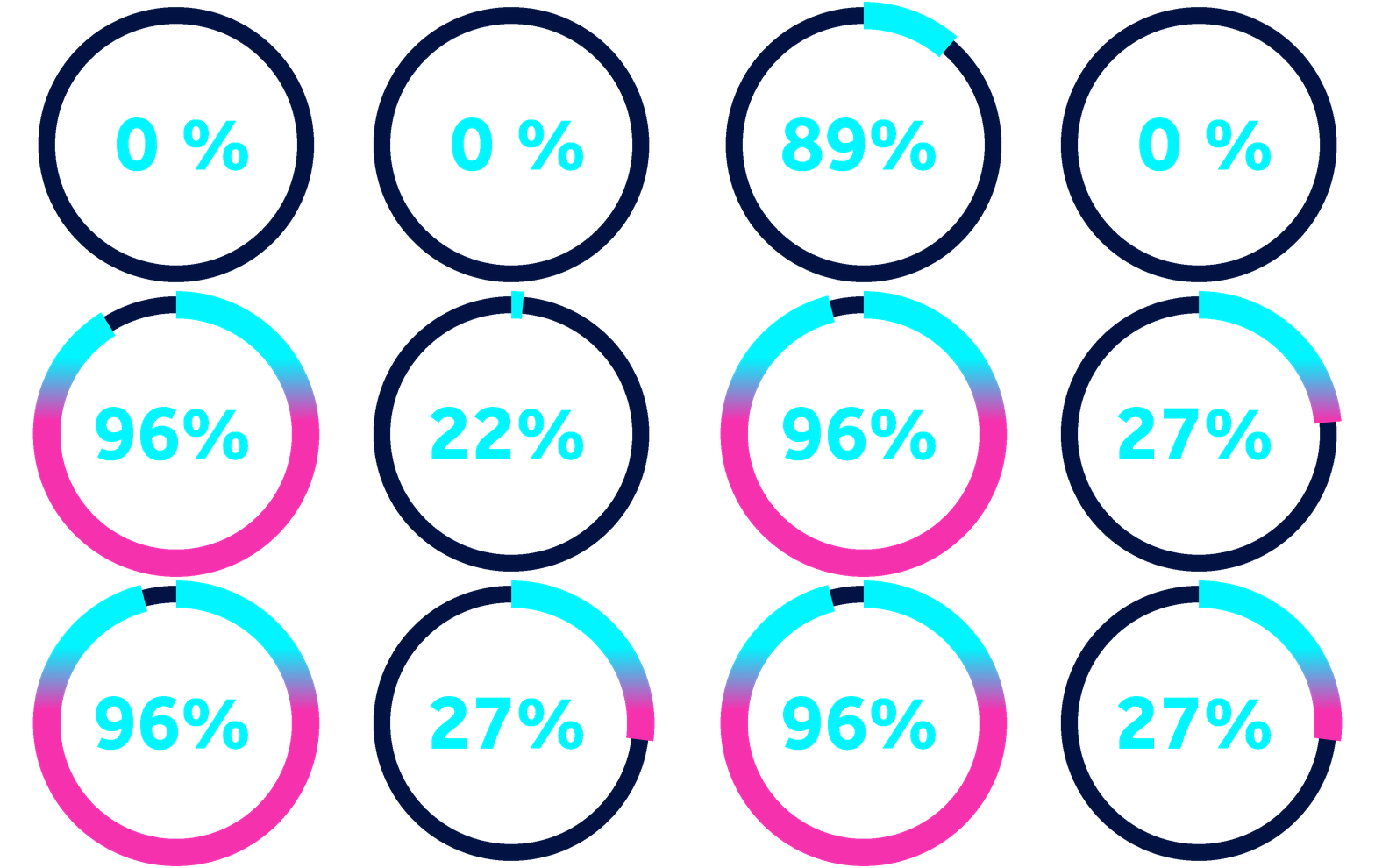
96% of firms are using AI across support services, but only 27% have redesigned the roles and workflows needed to make it work.
Only 41% have completed a formal review of support task types to identify where automation or AI can deliver the greatest impact.
This report provides practical guidance on closing that gap, from team restructuring and smarter task delegation to building the AI fluency that modern support functions require.
51% of firms expect to lose between 21 and 50% of support staff to retirement within five years, up 10% from 2025.
29% confirm a lack of standardized processes for knowledge transfer as a major challenge.
This report provides the workforce data and strategic insight needed to tackle attrition, plan for retirement risk and evolve support roles and skill structures for an AI-enabled future.
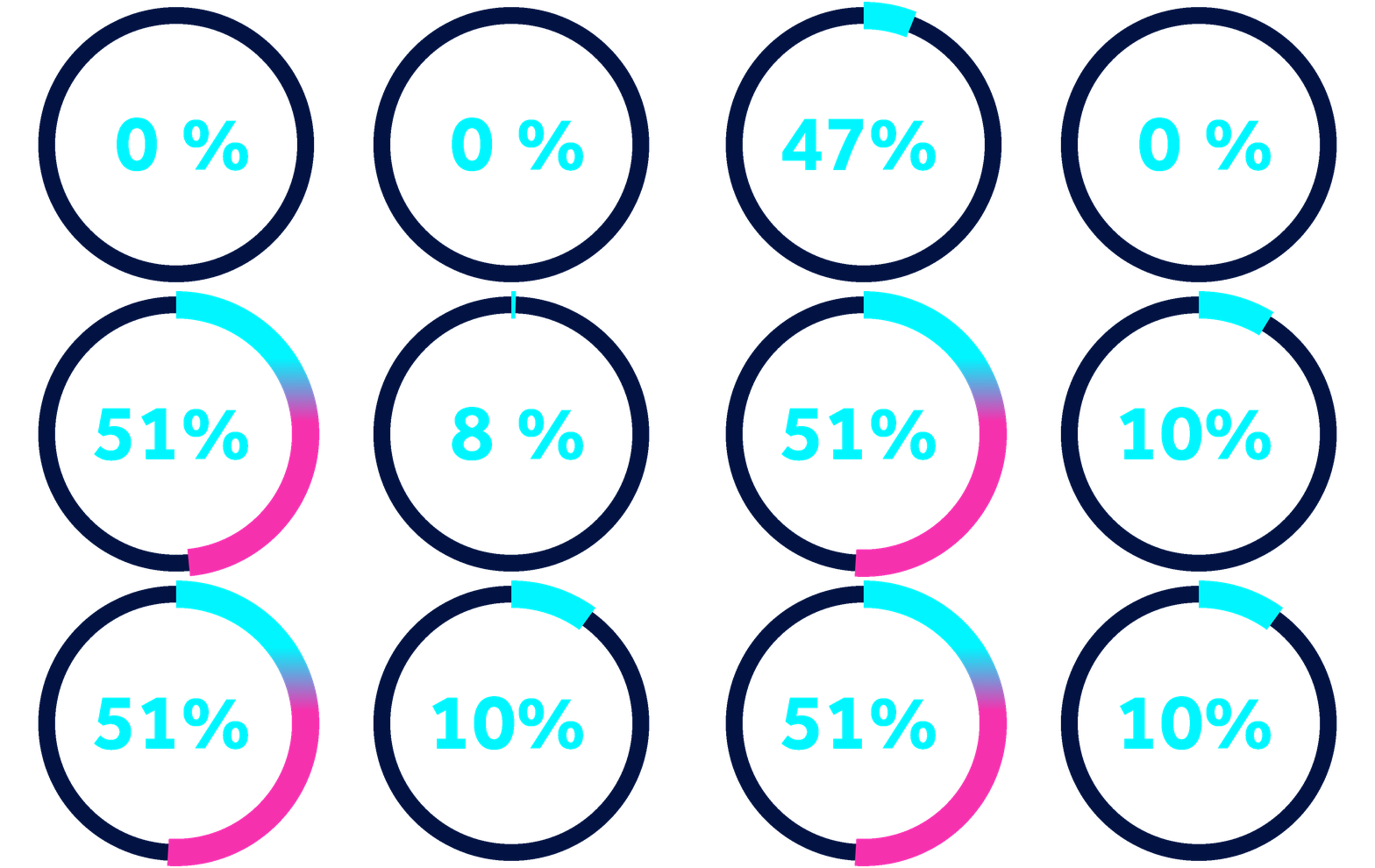
51% of firms expect to lose between 21 and 50% of support staff to retirement within five years, up 10% from 2025.
29% confirm a lack of standardized processes for knowledge transfer as a major challenge.
This report provides the workforce data and strategic insight needed to tackle attrition, plan for retirement risk and evolve support roles and skill structures for an AI-enabled future.
24% of firms report that support staff turnover is directly impacting billable hours and revenue.
95% of firms report increased client attrition, with 33% citing service delivery concerns as a primary driver.
This report makes the commercial case for investing in legal support, with evidence linking support function performance directly to profitability, billable time protection and client retention.
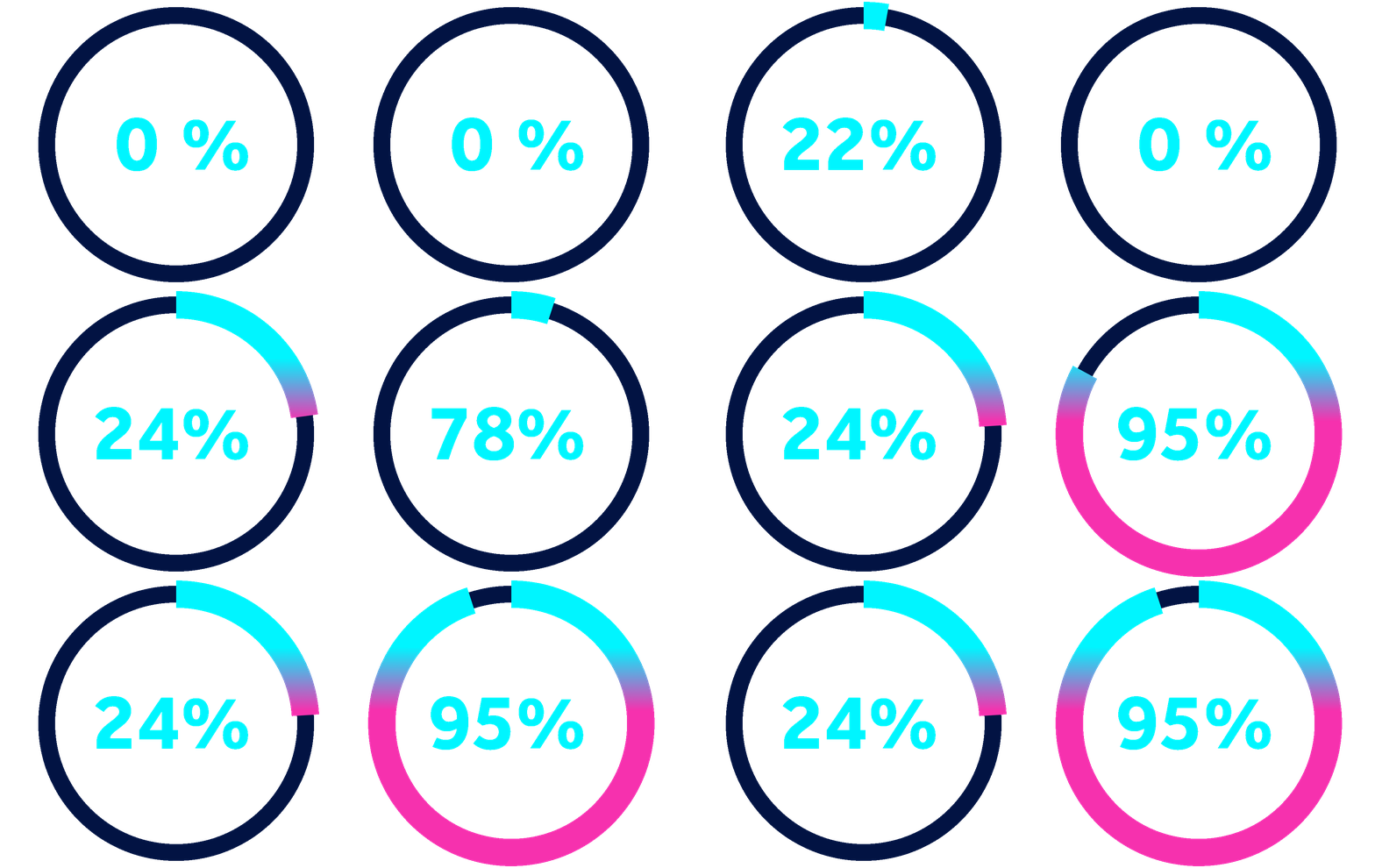
24% of firms report that support staff turnover is directly impacting billable hours and revenue.
95% of firms report increased client attrition, with 33% citing service delivery concerns as a primary driver.
This report makes the commercial case for investing in legal support, with evidence linking support function performance directly to profitability, billable time protection and client retention.
46% of firms say additional supervision is needed when working with AI-generated outputs, while 45% report increased time spent checking and verifying work.
Only 21% use structured workflow technology for task allocation and delegation.
Lawyers are absorbing quality control tasks that should sit within support functions. This report sets out how the right workflows, skills and operational structures can put that work back where it belongs.
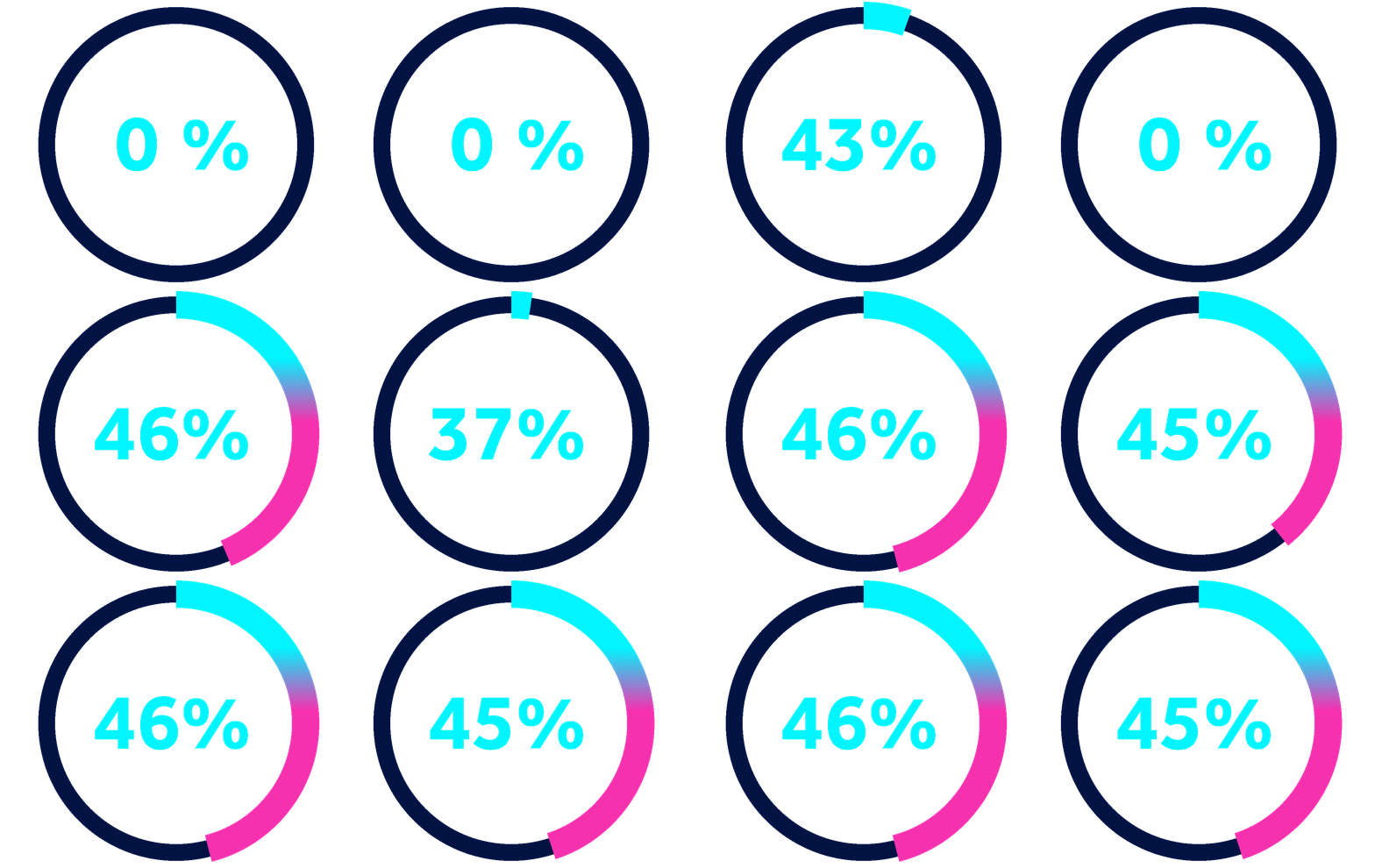
46% of firms say additional supervision is needed when working with AI-generated outputs, while 45% report increased time spent checking and verifying work.
Only 21% use structured workflow technology for task allocation and delegation.
Lawyers are absorbing quality control tasks that should sit within support functions. This report sets out how the right workflows, skills and operational structures can put that work back where it belongs.


 The research shows that 33% of firms cite service delivery concerns as a primary driver of client attrition. At the same time, 46% of firms say AI-generated outputs now require additional supervision, meaning the very technology meant to ease pressure is, for now, adding to it.
 Law firm leaders today face an unprecedented challenge. They must run their firms profitably on today's business models while designing new, AI-enabled models for a future already upon them, and the two are incompatible.
 If we don’t have a clear view into what our support professionals are doing—especially when only 64% of firms are using technology to track productivity—we can’t effectively identify skill gaps or create meaningful growth paths.
Unpack the findings from the 2026 BigHand Legal Workflow Leadership Report and explore what firms need to change to turn AI investment into real value.
Thought Leadership

Ben Jennings
Global Director - Workflow
BigHand

Cassie Hughes
Business Support Manager
Osborne Clarke

Darlene Bargo-Hornbeck
Senior Manager of Firm Administration
Ice Miller

Debra Levenduski
Senior Human Resources & Legal Support Manager
Holland & Hart LLP
Learn more about the Workflow Report Findings.
Thought Leadership + Product Preview Webinar

Daniel Morrissey
Senior Customer Success Manager, BigHand

Taylor Thompson
Solutions Manager
BigHand

Melissa Jester
CIO
Bricker Graydon Wyatt
The research identifies a widening gap between AI adoption and operational readiness. 96% of firms are using AI in support services, but only 27% have redesigned the workflows and roles needed to support it. Support staff retirement is accelerating, with 51% of firms expecting to lose up to half their workforce within five years. And with only 21% using structured workflow technology for delegation, firms lack the visibility to measure performance or protect billable time.
BigHand publishes this research annually to give law firm leaders a data-driven view of the challenges shaping legal support functions. Our goal is to give firms the evidence they need to make informed decisions about people, process and technology investment.
The 2026 BigHand Legal Workflow Leadership Report draws on survey responses from over 800 law firm leaders, across operations, HR and support managers across the UK and North America. Respondents span firms of varying sizes, all with 50+ lawyer headcount giving a broad and representative view of the market.
BigHand Workflow Management gives firms the operational control needed to close the gap between AI adoption and structural readiness. It automatically routes legal support work to the right person with the right skills, ensuring work is completed at the right level and cost. Real-time visibility into workload, capacity and utilization gives leadership the data to protect billable time, make informed resourcing decisions and build support functions that scale.