The Consequences of Subjective Staffing
Most firms still rely on spreadsheets, blanket emails, or informal conversations to assign work. But what used to be “good enough” is now creating costly blind spots.
Without visibility into capacity, skills, or availability, firms can’t see who’s overloaded, who’s falling behind target, or who is best suited for urgent client work. Partners are losing 3-5.5 hours every week searching for the “right fit,” and junior lawyers miss development opportunities that drive retention and profitability.
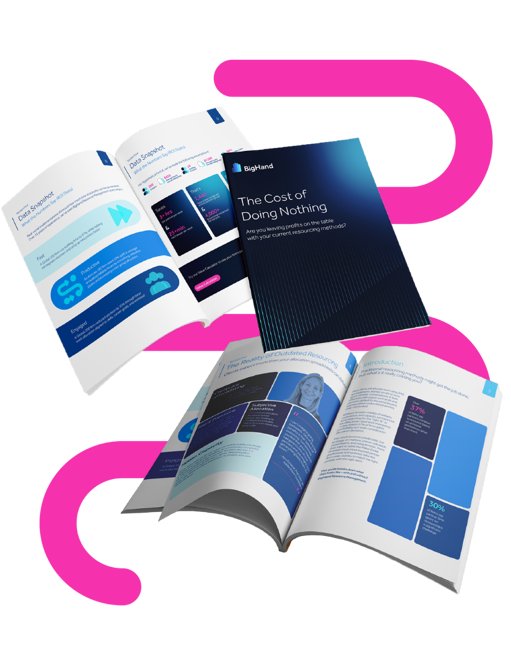
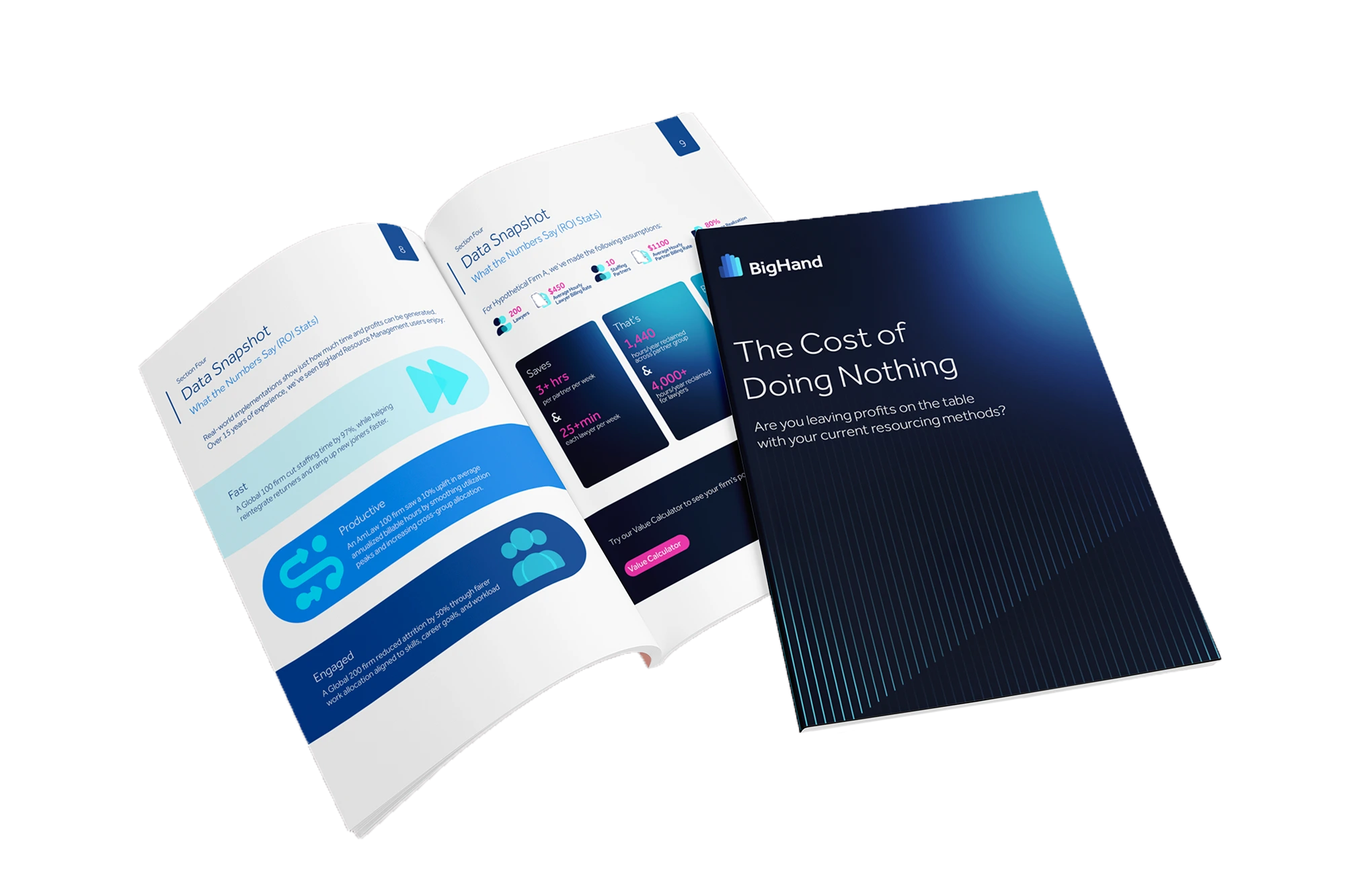
Our new guide, The Cost of Doing Nothing, helps firms assess whether their current resourcing strategy is enabling efficient client delivery and lawyer engagement, or quietly eroding margin, morale, and client trust. You’ll uncover where profit is lost, and how firms can reclaim time, revenue, and talent with the right tools.
Common Questions About Work Allocation and Efficiency
Frequently Asked Questions
- Frequently Asked Questions
Essential Insights Every Law Firm Should Know About Resourcing
Legal resource management is the strategic process of allocating legal resources to client matters, ensuring the right person with the right skills works on the right tasks, at the right cost. The Cost of Doing Nothing guide explains how data-driven resourcing helps firms improve utilization, reduce burnout, and deliver work more efficiently and profitably.
Manual or partner-led allocation leads to lost billable time, uneven workloads, and slower turnaround. The guide outlines where firms lose time and profit and what better resourcing can recover.
Uneven workloads, limited visibility into assignments, and a lack of growth opportunities contribute to burnout and attrition. The guide highlights how resource management supports engagement and reduces talent loss.
Common indicators include:
- Partners spending excessive time allocating or reallocating work
- Associates experiencing uneven workloads or a lack of access to development opportunities
- Limited visibility into who has capacity across teams or locations
- Difficulty forecasting staffing needs for new matters
- Burnout or rising attrition among mid-level lawyers
- Inconsistent client service due to work not being done on time or at the right level
The guide helps you assess whether your current approach is holding your firm back.
Yes. When work is allocated at the right level and at the right time, firms see higher utilization, reduced write-offs, and fewer bottlenecks. The guide shares real examples of firms achieving measurable ROI.
Not always, but manual tools rarely scale. The guide explains how people and technology combined provide visibility into skills, demand, and capacity, enabling faster and more consistent allocation decisions.
 Resource Management sits at the heart of every law firm’s success. Yet it’s commonly overlooked and lawyer-led, unsupported by formal process and structure or technology to support them. When allocation decisions are made without insight into capacity, skills, career ambitions, or cost, partners lose valuable time searching for the best fit or relying on overworked performers, instead of focusing on billables, client management, and growth.